
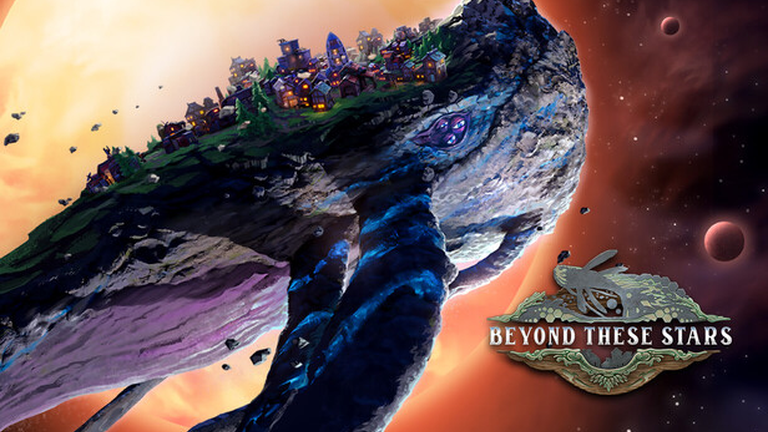
Understanding Beyond These Stars and Its Core Concept
Stepping out onto the back of a massive, universe-traveling space whale named Kewa offers a unique twist on traditional colony simulation games. Developed by Balancing Monkey Games and published by Hooded Horse, this title challenges players to guide their civilization—affectionately known as Peeps—through complex logistics, resource management, and interstellar exploration. Because the genre often blends cooperative play with solitary settlement building, many prospective players naturally search for Beyond These Stars multiplayer options before diving into the cosmic adventure.
When discussing Beyond These Stars multiplayer functionality, it helps to understand what the developers designed for the official launch. The game provides a rich, story-driven, single-player simulation experience across procedurally generated galaxies. Building an intricate society atop a living, breathing, sentient creature requires balancing delicate ecosystems, managing pollution, setting up trade outposts, and unlocking a massive tech tree entirely on your own terms.
| Feature Overview | Details |
|---|---|
| Developer | Balancing Monkey Games |
| Publisher | Hooded Horse |
| Release Date | October 16, 2026 |
| Primary Focus | Single-Player Colony Simulation & Strategy |
| Platform | PC (Steam) |
Exploring the Available Game Modes
While fans of cooperative strategy games frequently hope for online co-op capabilities, understanding the structure of single-player modes helps clarify how the experience flows. When you purchase the game via the Steam Store Page, you will find that the core software is tailored as a robust single-player experience with multiple ways to enjoy your journey across the galaxy.
The simulation offers distinct ways to play depending on how much challenge or narrative focus you desire. Whether you prefer a structured campaign that guides your Peeps through historical mysteries or an open-ended sandbox where you can experiment with terraforming and supply chains, each mode alters how you interact with Kewa.
| Game Mode | Description & Focus |
|---|---|
| Campaign Mode | Story-driven experience guiding your Peeps from survival basics to interstellar travel and ancient mysteries. |
| Sandbox Mode | Open-ended galaxy generation allowing customized parameters, relaxed rules, and unrestricted building freedom. |
| Scenario Mode | Specific challenges and restrictive conditions that test advanced logistics and problem-solving skills. |
How Colony Management and Logistics Work
Managing a civilization on a moving, organic canvas is vastly different from building a traditional city on flat terrain. Your Peeps need water, food, and housing within a limited breathable air pocket. As you progress, you must handle complex supply chains, prevent industrial byproducts from clogging your facilities, and carefully monitor your pollution levels to keep toxic waste from shutting down your operations.
Player experience and community reports on Steam highlight that early-game balance requires careful planning. For instance, managing soot production and electricity generation without overwhelming your settlement with copper and iron byproducts is a common hurdle. If pollution gets out of hand, specialized cleaners and thoughtful forest placement become vital to maintaining Kewa’s fragile health and happiness.
| Resource / System | Primary Function | Potential Pitfalls | | :--- | :--- | | Pollution & Toxins | Byproduct of heavy industry and smelting. | Can turn tiles toxic and halt factory production if unmanaged. | | Food & Water | Basic survival needs for Peeps. | Shortages lead to strikes, plummeting productivity, and colony collapse. | | Power & Electricity | Drives advanced machinery and factories. | Requires precise placement and grid connections to avoid stalls. | | Kewa Happiness | Reflects the bond between your city and the space whale. | Determines travel duration and symbiotic stability across star systems. |
Terraforming and Interstellar Exploration
Survival on Kewa is only the beginning of your civilization’s journey. Once you establish a stable foundation and begin communicating with the space whale, the game opens up into a vast galaxy-wide adventure. You can terraform the land by digging canals, adding topsoil, and planting trees to expand your breathable air pocket and create thriving green ecosystems.
Furthermore, you can establish reliable outposts on nearby planets to gather supplementary resources that Kewa’s back cannot supply. Along the way, you will cross paths with various alien species, trade goods, and unlock powerful technologies through a massive tech tree. This blend of micro-management and macro-exploration gives every procedurally generated galaxy a unique flavor.
| Exploration Phase | Key Activities & Objectives | Rewards & Benefits |
|---|---|---|
| Initial Settlement | Build huts, grow crops, and secure basic water supplies. | Establishes a stable population base for your Peeps. |
| Ecosystem Expansion | Terraform terrain, plant forests, and manage pollution. | Increases living space and improves oxygen flow. |
| Planetary Outposts | Build settlements on nearby worlds for rare materials. | Supplements scarce resources without overburdening Kewa. |
| Alien Diplomacy | Meet spacefaring species, trade, and complete objectives. | Unlocks advanced technologies and deepens lore comprehension. |
Community Expectations Regarding Beyond These Stars Multiplayer
When a new strategy or simulation game launches, discussions quickly turn to whether friends can build together online. In the case of Balancing Monkey Games’ latest title, community forums show that players primarily focus on the deep single-player mechanics, cozy atmosphere, and intricate narrative pacing. While some players naturally express interest in cooperative expansion, the game’s architecture is intentionally built around a deeply personal, narrative-driven bond between your civilization and Kewa.
As community reports indicate, managing the delicate equilibrium between industrial progress and the comfort of a sentient space whale requires constant attention. Introducing multiple players to a single living entity like Kewa would fundamentally alter the delicate balancing act at the heart of the game’s design. For now, players can share their creative colony screenshots, trade optimization tips on Discord and Reddit, and compare their survival strategies independently.
| Discussion Topic | Community Sentiment | Developer Focus |
|---|---|---|
| Multiplayer Demand | Some requests for co-op, but secondary to core mechanics. | Maintained focus on a rich, single-player narrative experience. |
| Quality of Life | High praise for responsive hotfixes and balance patches. | Ongoing refinements based on tester and player feedback. |
| Cozy vs. Complex | Valued for its relaxing aesthetic combined with deep logistics. | Balancing casual accessibility with strategic depth. |
Frequently Asked Questions
Does Beyond These Stars include online multiplayer or co-op modes?
No, the game is designed strictly as a single-player simulation and strategy experience. You manage your civilization, supply chains, and relationship with the space whale entirely on your own.
What game modes are available for single players?
Players can choose between a narrative-focused Campaign mode, a customizable Sandbox mode for relaxed building, and challenging Scenario modes that test advanced logistics skills.
How does the relationship with Kewa affect gameplay?
Kewa is a living, breathing companion rather than a static map. Keeping Kewa happy and maintaining ecological balance is crucial for smooth space travel and discovering new star systems.
Can I run Beyond These Stars on lower-end hardware?
The game requires a 64-bit processor, Windows 10, at least 8 GB of RAM, and a DirectX 11 compatible graphics card (such as an NVIDIA GTX 960 or AMD RX 570), with an SSD strongly recommended.