
Introduction to the Cosmic City Builder
Have you ever wondered what it would be like to manage an entire civilization perched precariously on the back of a massive, drifting creature? The Beyond These Stars demo gave players their very first taste of this extraordinary sci-fi premise, letting them experience the delicate balance between urban growth and symbiotic coexistence. As you dive into the Beyond These Stars demo, you quickly realize that this is not your typical grid-based strategy title; it is a living, breathing ecosystem test that requires careful logistics, resource management, and profound respect for your colossal host.
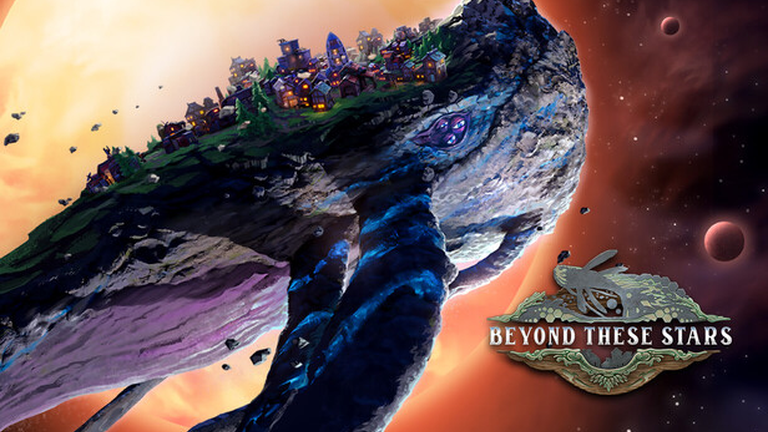
Balancing Monkey Games crafted a unique experience where displaced people known as Peeps seek refuge on Kewa, a lonely lithoid space whale traversing a procedurally generated cosmos. The initial trial runs and subsequent updates paved the way for the full launch, allowing strategy enthusiasts to test core mechanics long before the complete release on platforms like Steam. Whether you are evaluating production chains or figuring out how to handle early-stage pollution, understanding the foundations laid by the preview version is essential for mastering the universe-faring simulation.
The Unique Premise of Living on Kewa
At its core, the simulation asks a deeply philosophical question: how will your society use a second chance at survival? Kewa is far more than a moving piece of land; the space whale is a sentient being with its own needs, feelings, and limits. During early playthroughs, players quickly learned that treating Kewa like a resource farm leads to trouble, while striving for harmony opens up rewarding narrative paths and stable expansion.
The setting presents distinct spatial constraints. You do not have infinite territory to expand outward; instead, you must work around the organic contours of Kewa’s body. Starting near a small patch of green by the water, your Peeps must establish basic housing, gathering spots, and storage hubs.
| Feature | Description | Impact on Gameplay |
|---|---|---|
| Living Host | Kewa reacts to your settlement’s footprint. | Forcing too much industrial growth shrinks your available habitat. |
| Spatial Limits | A restricted, organic building surface. | Forces careful placement and reliance on terrain shaping. |
| Symbiotic Journey | Traveling through star systems together. | Dictates when you can explore nearby planets and establish outposts. |
Community reports from early play sessions highlighted how refreshing it was to deal with organic terrain rather than flat squares. However, players also noted that balancing supply chains within such tight borders requires forward-thinking architecture and smart use of early game zones.
Core Mechanics Explored in the Preview
City building on a mobile creature means traditional expansion rules do not apply. The preview version introduced players to terraforming and basic resource loops that dictate how a colony survives in deep space. You cannot simply chop down every tree or pave over every field without consequences.
Terraforming and Ecosystem Management
To make room for farms and housing, players must actively shape the land. Digging canals and adding topsoil prepare the terrain for agriculture, while planting trees ensures a steady flow of raw materials. Forests also play a critical role in spreading the atmosphere across the whale’s back.
However, pollution management became a major talking point in player discussions. Industrial buildings generate waste, and understanding how nearby forests scrub away pollution is vital for maintaining a healthy habitat.
| Resource Type | Acquisition Method | Primary Purpose |
|---|---|---|
| Raw Materials | Foraging, forestry, and mining | Basic construction and tool making |
| Advanced Goods | Research and complex supply chains | Upgrading Peep living standards |
| Outpost Supplies | Planetary extraction | Supplementing Kewa’s limited resources |
According to player feedback, grasping the range of pollution-clearing mechanics and understanding landscaping tools like compost were some of the early learning curves. Navigating these systems efficiently prevents your habitat from shrinking over time.
Navigating the Cosmos: Outposts and Exploration
Building an entire civilization on the back of a single space whale has inherent limitations. Kewa’s ecosystem can only support so much industry before becoming overburdened. To overcome this, the gameplay loop encourages you to establish outposts on nearby planets discovered along your journey.
As Kewa drifts through the cosmos, you will encounter diverse star systems, alien species, and planetary bodies ripe for resource extraction. Managing these outposts requires coordination with your host. If you push Kewa too hard or fail to build a strong relationship with the creature, it might decide to leave a system behind before your mining infrastructure has finished extracting vital supplies.
| Action | Risk | Reward |
|---|---|---|
| Aggressive Extraction | Damages Kewa’s ecosystem and trust | High short-term resource yields |
| Balanced Symbiosis | Slower resource gathering | Long-term stability and unique story paths |
| Planetary Outposts | Demands logistical oversight | Access to rare minerals not found on Kewa |
This dynamic creates a compelling push-and-pull mechanic. Do you risk upsetting your living home for immediate survival gains, or do you pace your expansion and rely on diplomatic trade with other spacefaring species?
Community Feedback and Quality of Life Improvements
The development journey of this spacefaring simulation was heavily shaped by its community. From its initial debut to subsequent patches, player insights on digital forums provided developers with invaluable data regarding user experience, interface clarity, and balance tweaks.
Early testers pointed out several key areas for improvement that ultimately refined the overall experience:
- UI and Readability: Players requested clearer indicators for building radiuses, especially concerning how forestry impacts pollution cleanup.
- Micro-Management Adjustments: Discussions often centered on warehouse sizes, storage capacities, and building ranges to reduce repetitive shuffling of resources.
- Narrative Engagement: Many users expressed a strong desire to lean into the emotional core of the story, praising the atmospheric cutscenes, dialogue trees, and the unique interaction moments with Kewa.
| Update Phase | Focus Area | Community Response |
|---|---|---|
| Initial Launch | Core mechanics and concept validation | High praise for the unique solarpunk aesthetic and whale setting. |
| Patch Iterations | Bug fixes and localization improvements | Positive reception to localized text and smoother building movement. |
| Full Release Transition | Finalizing logistics and tech trees | Enthusiastic transition to the complete 1.0 version with active launch discounts. |
These iterative adjustments demonstrate how developer responsiveness transforms a promising concept into a polished strategy game.
System Requirements and Technical Performance
Running a simulation that tracks both a sprawling city and a massive, moving cosmic creature requires decent hardware. Reviewing the technical specifications ensures your rig can handle the graphical fidelity and complex supply chains without stuttering.
| System Component | Minimum Requirements | Recommended Requirements |
|---|---|---|
| Operating System | Windows 10 (64-bit) | Windows 10 (64-bit) |
| Processor | Intel Core i5-6600 / AMD Ryzen 3 3200G | Intel Core i5-9600 / AMD Ryzen 5 2600X |
| Memory | 8 GB RAM | 16 GB RAM |
| Graphics | NVIDIA GTX 960 / AMD RX 570 (4 GB) | NVIDIA RTX 2070 / AMD RX 6600 XT (8 GB) |
| Storage | 7 GB available space (SSD recommended) | 7 GB available space (SSD recommended) |
Performance reports during public trials indicated that movement across Kewa’s body remained smooth even as cities grew denser. Ensuring your system meets or exceeds these benchmarks guarantees a stutter-free journey through the stars.
Frequently Asked Questions
Is the Beyond These Stars demo still playable?
Yes, early evaluation versions and trial builds have historically been made available on digital storefronts like Steam, often accessible directly from the main store page on the right-hand sidebar.
How does building on a space whale differ from traditional city builders?
Instead of expanding infinitely on a flat, static grid, you must build within the organic, restricted boundaries of a living creature. Every industrial choice affects Kewa’s ecosystem health, forcing you to balance city expansion with ecological sustainability.
Can I gather resources away from Kewa?
Yes, as Kewa travels through procedurally generated star systems, you can establish outposts on nearby planets to harvest supplementary materials, provided Kewa stays in the system long enough.
What platforms are available for the full game?
Following its development phases and public previews, the complete game launched on PC via Steam and the Epic Games Store, complete with localization across numerous languages.